Indoor Cat Enrichment: 15 Ways to Keep a House Cat Happy
On this page
Indoor cat enrichment means giving a house cat regular chances to hunt, climb, explore, scratch and rest in the ways its body and brain are built for. You do not need a large home or expensive kit. A handful of well-chosen changes to play, feeding and the layout of your rooms can make an indoor life a genuinely satisfying one.
Key Points
- Indoor cats still have the instincts of a hunter, so short, frequent play sessions that mimic stalking and catching prey matter more than a pile of toys.
- Height, hiding places and scratching posts help a cat feel secure and in control of its space.
- Making food a little harder to get, with puzzle feeders or scatter feeding, adds mental work to every day.
- Every cat is different. Watch what your cat chooses and build on it.
- Sudden changes in behaviour can be a sign of illness rather than boredom, so check with a vet if something seems off.
Why Enrichment Matters For An Indoor Cat
Keeping a cat indoors protects it from traffic, fights and some infectious diseases, and many owners in flats or busy areas have little real choice. The trade-off is that the home has to supply what the outdoors would have offered: things to chase, places to patrol, new smells and a sense of control over the environment.
A cat without enough to do may not look obviously unhappy. Instead you might notice overeating and weight gain, night-time yowling, scratching furniture, over-grooming, or pouncing on ankles. These behaviours are often the cat trying to meet a need in the only way available. Enrichment gives that energy a better outlet.
Play That Mimics Hunting
Play is the single most useful thing you can offer. The aim is to recreate the sequence a cat would follow outdoors: watch, stalk, chase, pounce, catch, then eat.
1. Daily Wand Toy Sessions
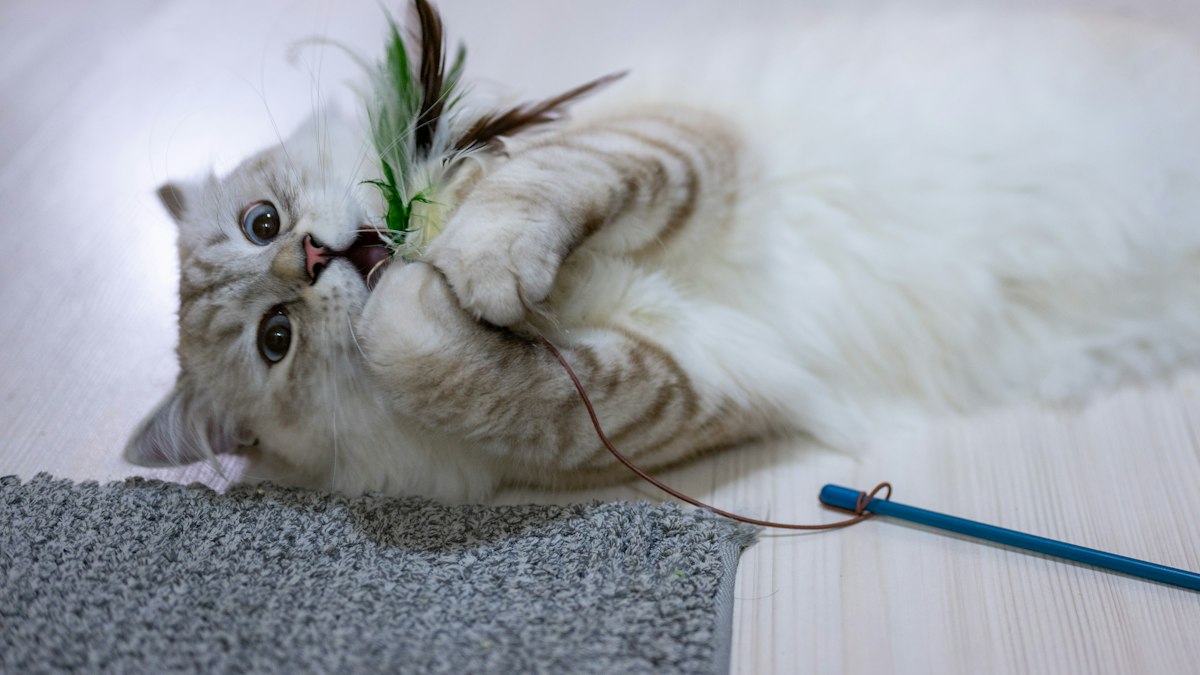
A wand or fishing-rod toy with feathers or a fabric tail lets you move the “prey” the way a mouse or bird would. Drag it along the floor, let it disappear behind a chair, then have it twitch into view. Aim for two or three sessions of around ten minutes rather than one long one. Many cats are most playful at dawn and dusk.
2. Let Your Cat Win
Always end a session by letting your cat catch the toy properly. A cat that never gets to finish the hunt can be left frustrated. Following play with a small meal or a few treats completes the natural sequence and helps your cat settle afterwards.
3. Rotate Toys
Cats lose interest in toys that are always lying around. Keep most of them in a closed drawer or box and bring out a few at a time, swapping every few days. An old toy can feel new again after a week away.
4. Solo Toys For When You Are Out
Balls in a track, crinkly tunnels and kicker toys (long, pillow-like toys a cat can grab and bunny-kick) give your cat something to do alone. Put away anything with string, ribbon or elastic when you cannot supervise, as these can be swallowed.
Food As An Activity
In the wild, a cat would make many small hunts a day. Food served in a bowl is gone in seconds. Turning mealtimes into a bit of work is an easy way to add interest.
5. Puzzle Feeders
Puzzle feeders range from simple balls that drop dry food as they roll to boards where a cat paws food out of cups. Start with an easy one so your cat succeeds quickly, then make it harder over time. You can make your own from an egg box or a toilet roll tube with the ends folded closed.
6. Scatter And Hide Food
Scatter part of your cat’s daily dry food across a clean floor, or hide small portions around a room. This encourages sniffing and searching. Keep the total amount the same as your cat’s usual daily ration so you are not adding extra calories.
7. Several Small Meals
Splitting the daily ration into smaller portions spread through the day suits many cats better than one or two big meals. An automatic feeder can help if you are out at work.
Using Height And Space
Cats experience their home in three dimensions. Vertical space increases the usable area of a small flat and gives a cat somewhere safe to watch from.
8. Cat Trees And Shelves
A sturdy cat tree, or a series of wall-mounted shelves, lets your cat climb and survey the room. Make sure anything tall is stable and will not wobble when your cat jumps on or off. Place at least one high perch in the room where your family spends most time.
9. Hiding Places
Hiding is a normal way for a cat to cope with stress. Cardboard boxes on their side, covered beds and the space under a bed with a blanket all work. In a multi-cat home, provide enough hiding places that no cat has to compete for one.
10. Window Watching
A secure window perch or a shelf beside a window gives your cat a view of birds, people and passing traffic. This is often called “cat TV” for good reason. Check that windows and any screens are secure before encouraging your cat to sit there.
Scratching And Grooming Needs
11. Proper Scratching Posts
Scratching keeps claws in condition, stretches the body and leaves scent marks. A good post is tall enough for your cat to stretch fully and heavy enough not to tip over. Offer both upright and flat scratchers, as some cats prefer one or the other, and place them near sleeping spots and room entrances where cats like to mark.
12. Gentle Grooming Sessions
Many cats enjoy a brush, especially longer-haired breeds. Short, calm grooming sessions are a form of social contact and let you check the coat and skin at the same time. Stop if your cat’s tail starts to flick or its ears turn back.
Engaging The Senses
13. Safe Plants And Grasses
A pot of cat grass gives your cat something to nibble and explore. Many common houseplants and cut flowers are toxic to cats, with lilies being especially dangerous, so check every plant before bringing it home and keep anything you are unsure of out of the house.
14. New Smells And Textures
Bring the outside in. A cardboard box with a few dry leaves, a new blanket, or a paper bag (handles removed) can keep a curious cat busy. Some cats react strongly to catnip, while others ignore it entirely; it is worth trying to see which group yours belongs to.
Training And Social Time
15. Teach Simple Tricks
Cats can learn with reward-based training, and short sessions are a good mental workout. Try teaching your cat to come when called, sit, or touch its nose to your hand, using tiny treats or a lick of a favourite food as rewards. A clicker can help mark the exact moment your cat gets it right. Keep sessions to a couple of minutes and stop while your cat is still keen.
Social contact matters too, but on your cat’s terms. Some cats want to sit on you for hours; others prefer to be in the same room without being touched. Respecting those preferences helps your cat feel safe.
Building A Routine That Works
You do not need to do all fifteen ideas every day. A realistic routine might look like this:
| Time | Activity |
|---|---|
| Morning | Ten-minute wand play, then breakfast in a puzzle feeder |
| Daytime | Window perch, solo toys, some food scattered or hidden |
| Evening | Second play session, short training or grooming, then a meal |
| Weekly | Rotate toys, add a new box or scent, check posts and perches are sound |
Watch how your cat responds. If a toy is ignored, try a different movement or texture rather than giving up on play altogether. Older cats may prefer slower, ground-level games, while young cats may need more and longer sessions.
For more on everyday cat care, browse our cat care hub, or explore the care library for guides covering other pets.
When To Speak To A Vet
Changes in behaviour are sometimes put down to boredom when there is a health problem behind them. Contact a vet if you notice:
- A sudden loss of interest in play or food that lasts more than a day or so
- Hiding much more than usual, or reluctance to jump onto favourite perches
- Over-grooming that leaves bald patches or sore skin
- Changes in toileting, such as going outside the litter tray or straining
- New aggression, yowling or restlessness, especially in an older cat
- Noticeable weight gain or weight loss
This article is general information. A qualified veterinarian can examine your cat and advise on its individual needs.
Frequently Asked Questions
How Much Play Does An Indoor Cat Need Each Day?
Most cats do well with two or three short sessions of interactive play a day, of around ten minutes each. Kittens and young adults often need more, while older cats may prefer gentler, shorter games.
Is It Cruel To Keep A Cat Indoors?
Not if the cat’s needs are met. An indoor cat with regular play, places to climb and hide, scratching posts and attention from its people can live a full and contented life.
Will A Second Cat Stop My Cat Getting Bored?
Not always. Some cats enjoy company, but many prefer to live alone, and a poorly matched pair can cause stress for both. Focus first on enriching your current cat’s environment, and research carefully before adding another.
Are Laser Pointers A Good Toy?
Many cats enjoy chasing a laser dot, but they can never actually catch it. If you use one, finish by moving the dot onto a real toy or treat your cat can grab, and never shine it in anyone’s eyes.
Enrichment does not have to be complicated. Notice what your cat enjoys, offer a little more of it, and keep things fresh. Small daily efforts add up to a calmer, healthier and more contented indoor cat.