
On this page
THE HORSES CARE HUB
Horses, ponies and donkeys are social grazing animals that need space, company and consistent daily care.
What This Hub Covers
This hub covers horses, ponies and donkeys. Equines are large, long-lived herd animals whose digestive systems evolved for eating fibrous plants little and often, for most of the day. Almost every part of good equine care follows from that: plenty of forage, space to move, the company of other equines, and a team of professionals to look after their feet, teeth and health. Donkeys share many needs with horses but differ in important ways, which we point out below.
Is A Horse, Pony Or Donkey Right For You?
- Lifespan: many horses and ponies live into their late twenties or beyond, and donkeys are often as long-lived. Taking one on is a commitment of decades.
- Time: equines need checking at least once and usually twice a day, every day, whatever the weather.
- Land or livery: you will need suitable grazing and shelter, either your own or at a livery yard. Livery ranges from DIY, where you do everything, to full livery, where the yard does most daily care.
- Costs: beyond the purchase price, budget for forage, bedding, farrier visits, dental checks, vaccinations, worm control, insurance, tack and emergency vet bills.
- Company: equines are herd animals and should not be kept alone. A suitable equine companion is part of the commitment.
- Paperwork: many countries require equine identification. In the UK, for example, horses, ponies and donkeys need a passport and a microchip. Check the rules where you live.
Loaning or sharing a horse is a sensible way to gain experience before buying.
Essential Equipment Checklist
- A well-fitted headcollar and lead rope
- A grooming kit, including a hoof pick
- Water troughs or buckets, and haynets or another way to feed forage
- Safe fencing and a field shelter or stable
- Mucking-out tools and a plan for removing droppings from the field
- Rugs only where your horse genuinely needs them, such as for clipped or older horses
- Fly protection for summer
- An equine first aid kit and a weigh tape
- Tack fitted by a qualified saddle fitter, if you ride
- Contact details for your equine vet, farrier and dentist
Grazing, Shelter And Fencing
Good grazing is the foundation of horse care, but more grass is not always better. Rich spring and autumn grass can trigger laminitis, a painful hoof condition, especially in ponies, donkeys and overweight horses, so many owners restrict grazing at those times. Overgrazed, muddy fields have their own problems, so rest and rotate paddocks where you can.
- Fencing: use post-and-rail, safe equine fencing or well-maintained electric fencing. Avoid barbed wire.
- Poisonous plants: check fields regularly for plants such as ragwort, yew, and sycamore seeds and seedlings, and fence off oak trees if acorns fall in quantity.
- Droppings: regular poo-picking keeps the pasture healthier and reduces the worm burden.
- Shelter: provide protection from wind, rain, sun and flies, whether a field shelter, thick hedging or trees. Donkey coats are not as waterproof as horse coats, so donkeys need access to a dry shelter.
Stabled horses need good ventilation, clean bedding and as much turnout as possible.
Food And Water
Forage, meaning grass, hay or haylage, should make up the bulk of the diet. A widely used guideline is that a horse needs forage of around 1.5 to 2 per cent of its bodyweight per day, but individual needs vary, so ask your vet or a qualified equine nutritionist if you are unsure.
- Feed little and often, and avoid long gaps without forage.
- Only add hard feed if your horse’s work or condition needs it.
- Make any change to the diet gradually.
- Provide clean, fresh water at all times, and break ice in winter.
- Offer a salt or mineral lick.
- Monitor weight with a weigh tape and body condition scoring every few weeks.
Donkeys evolved in harsh, dry environments and gain weight very easily on rich food. They usually need a higher-fibre, lower-energy diet than horses, often including suitable straw, with grazing carefully limited.
Hooves, Teeth And Routine Health
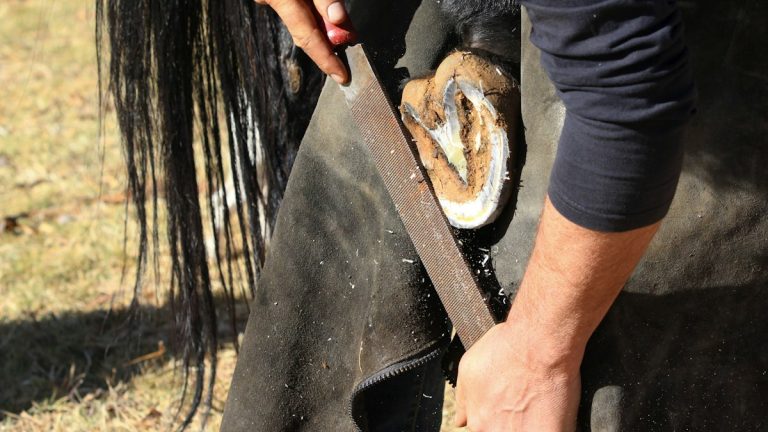
- Farrier: hooves grow continuously; most horses need trimming or reshoeing roughly every six to eight weeks, depending on growth and workload.
- Teeth: equine teeth keep erupting throughout life and can develop sharp edges. A check by a vet or qualified equine dental technician, typically at least once a year, is standard.
- Vaccinations: discuss protection against diseases such as tetanus and equine influenza with your vet.
- Worm control: many vets now recommend testing droppings (faecal egg counts) to target treatment rather than worming routinely.
- Daily hoof care: pick out the feet and check for heat, smells or stones.
Behaviour, Handling And Enrichment
Horses are prey animals with a strong instinct to run from danger, and they are very sensitive to body language. Approach from the side towards the shoulder, speak so they know you are there, and avoid standing directly behind them. Ears, tail, eyes and posture tell you a great deal about how relaxed or worried a horse feels.
The most important enrichment is the simplest: turnout, company and forage. Horses stabled for long periods with little forage or contact may develop repetitive behaviours such as weaving or crib-biting, often a sign that their needs are not being met.
A Simple Care Routine
- Daily: check every equine at least once, ideally twice; check water, forage, fencing and rugs; pick out feet; look for injuries; muck out or poo-pick.
- Weekly: check weight and body condition, walk the field for hazards and poisonous plants, and clean tack and water troughs.
- Every six to eight weeks: farrier visit.
- Yearly: dental check, vaccinations and a general health check with your vet, plus saddle-fit checks if you ride.
Life Stages
Foals depend on their mothers and on good handling early on. Young horses need time to grow before being asked to do much work. Adults need their diet and exercise matched to their workload. Older horses, often called veterans, may need softer forage if their teeth wear, extra warmth in winter, careful weight monitoring and more frequent checks with the vet.
Signs Worth Discussing With An Equine Vet
Some equine problems are emergencies. Call your vet promptly if you see:
- Signs of colic: pawing, rolling, looking at the flank, sweating, or no droppings
- Sudden lameness or reluctance to move
- Heat in the feet or a rocked-back stance, which can indicate laminitis
- Wounds, especially near joints, or any eye injury
- Food or saliva coming from the nostrils
- Laboured breathing, high temperature, or not eating
Learn your horse’s normal temperature, pulse and breathing rate while it is well, and ask your vet to show you how to check them. Donkeys tend to show pain and illness more subtly than horses, so even small changes in behaviour or appetite deserve attention.
Frequently Asked Questions
Can A Horse Live Alone?
Horses, ponies and donkeys are herd animals and are generally happiest with at least one equine companion. Donkeys often form strong bonds with a particular companion.
Are Donkeys Just Small Horses?
No. They need less rich food, better protection from rain, and an owner alert to subtle signs of pain.
Do I Need My Own Land?
Not necessarily. Many owners use livery yards, which provide grazing, stabling and varying levels of help.
Where Can I Learn More?
Our farm animals hub covers other larger animals, and our pet care guides cover general welfare. Read how we prepare information in our editorial policy.
Latest Horses Articles
October 6, 2026
Horse Hoof Care Basics: Daily Picking, Farrier Visits And Warning Signs
Horse hoof care basics: how to pick out feet, what to check daily, working with your farrier and warning signs that need prompt attention.
Read article →This is general educational information. For individual health questions, speak with a qualified veterinarian. Explore all pet care topics →