
On this page
THE AMPHIBIANS CARE HUB
Amphibians absorb water and substances through their skin, so their environment shapes their wellbeing every day.
What This Hub Covers
Amphibians include frogs, toads, newts, salamanders and the axolotl. What sets them apart from almost every other pet is their skin. It is thin and permeable, so it absorbs whatever is around it: chlorine in tap water, traces of soap or hand cream, or waste building up in a tank. Good amphibian care is mostly about getting the environment right and keeping it stable, rather than about interaction.
Is An Amphibian The Right Animal For You?
- Lifespan: many commonly kept species live for ten years or more with good care, and some live considerably longer. Plan for the long term before you buy.
- Time: daily checks take minutes, but water changes, cleaning and sourcing live food add up each week.
- Interaction: amphibians are animals to watch, not to cuddle, and many are most active in the evening.
- Costs: the enclosure, filtration, thermometers, lighting and water testing usually cost more than the animal itself, and there are running costs for food and electricity.
- Sourcing and the law: choose captive-bred animals from a reputable breeder or rescue. Never take frogs, toads or newts from the wild, and never release a pet outdoors. Some species are protected, and keeping or selling certain non-native species is restricted in some places, so check your local rules first.
- Household fit: amphibians are not a good choice for young children who want to handle a pet. Like reptiles, they can carry bacteria such as Salmonella without looking unwell, so hand-washing after any contact with the animal or its water is essential.
Essential Equipment Checklist
- An enclosure suited to the species (land-based, tree-dwelling, semi-aquatic or fully aquatic) with a secure, ventilated lid
- A water conditioner that removes chlorine and chloramine, or another safe water source
- A thermometer and, for land species, a hygrometer to monitor humidity
- A water test kit for ammonia, nitrite, nitrate and pH (essential for aquatic species)
- A gentle filter for aquatic set-ups; strong currents stress most amphibians
- Safe substrate such as moist soil-based mixes, moss or leaf litter, avoiding gravel small enough to be swallowed
- Hides, cork bark, live or artificial plants and a shallow water dish
- A misting bottle used only for clean, dechlorinated water
- A separate quarantine tub for new animals or for any that become unwell
Housing And Habitat
Land-Based And Semi-Aquatic Species
Toads, many frogs and terrestrial salamanders need a damp but not waterlogged floor, plenty of places to hide and a shallow water dish they can climb in and out of easily. Good ventilation matters as much as humidity: stagnant, wet air encourages mould and skin problems.
Tree-Dwelling Frogs
Arboreal species need height more than floor space, with branches, vines and foliage to climb and perch on, plus regular misting to keep humidity up.
Fully Aquatic Species
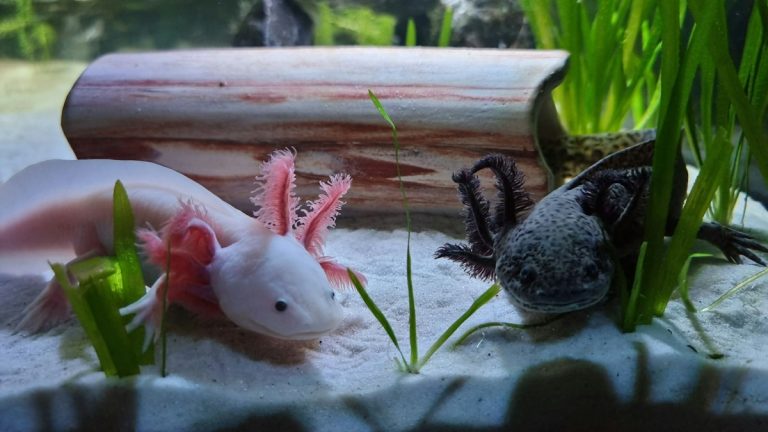
Axolotls, aquatic frogs and some newts live permanently in water. The tank should be filtered and fully cycled before any animal goes in, so that beneficial bacteria can process waste; our fish care hub explains the same nitrogen cycle principles. Axolotls in particular prefer cool water, and many keepers aim for the mid-to-high teens Celsius. Warm water stresses them, so a cool room matters more than a heater.
For most amphibians, overheating is a bigger risk than cold. Keep enclosures away from radiators and sunny windows, and check the temperature range for your particular species rather than assuming tropical warmth is best.
Food And Water
Most adult amphibians are carnivores that eat live invertebrates such as crickets and earthworms; movement triggers their feeding response. Our invertebrates hub covers keeping some feeder species.
- Offer prey no larger than the animal can comfortably swallow; a common guideline is no wider than the space between its eyes.
- Feed insects a nutritious diet before offering them (gut-loading) and use a calcium and vitamin supplement as recommended for your species.
- Avoid wild-caught insects, which may carry parasites or pesticides.
- Aquatic species can often be fed earthworms or sinking foods made for them. Remove uneaten food so it does not foul the water.
- Juveniles usually need feeding more often than adults.
Water quality is part of feeding, too. Untreated tap water can harm amphibian skin, so always dechlorinate it and let it reach room temperature before use.
Behaviour, Handling And Enrichment
Handle amphibians as little as possible. Warm, dry hands can damage their protective skin coating, and anything on your hands can be absorbed. If you need to move one, rinse your hands thoroughly with clean, dechlorinated water first, or wear moistened powder-free gloves, and keep it brief. Some species produce skin secretions that irritate eyes and mouths, so always wash your hands afterwards. For aquatic species, use a soft net or a container rather than lifting them out by hand.
Enrichment means a habitat that lets them behave naturally: varied hides, leaf litter to forage through, plants to climb and dim evening light so you can watch them hunt.
A Simple Care Routine
| How often | Tasks |
|---|---|
| Daily | Check temperature and humidity, refresh water dishes, mist if needed, remove droppings and uneaten food, and look at each animal. |
| Every few days | Feed adults according to species needs, and test water in aquatic set-ups, especially new ones. |
| Weekly | Partial water changes with conditioned water, wipe glass, check equipment and spot-clean substrate. |
| Monthly | Rinse filter media in old tank water (never tap water), replace tired substrate or leaf litter, and keep notes on weight and appetite. |
Life Stages
Most amphibians begin life as aquatic larvae, such as tadpoles, before changing into their adult form. Larvae and newly changed juveniles have very different food, water and space needs from adults, and the transition is a delicate time. Axolotls are an exception: they normally stay in their aquatic, gilled larval form for life. Older amphibians may become less active and eat a little less, so watch for gradual changes in weight and body condition.
Signs Worth Discussing With A Vet
Amphibians often hide illness until it is advanced, so early attention matters. Speak to a vet experienced with amphibians if you notice:
- Refusing food for longer than is normal for the species
- Reddening of the skin, especially on the belly or legs, ulcers, cloudy patches or unusual shedding
- Swelling or bloating, or weight loss
- Lethargy, unusual posture, or an aquatic animal that floats and cannot dive
- In axolotls, shrinking or curled gills, or fuzzy white growths
- Twitching, weakness or difficulty catching prey
- Cloudy eyes or discharge
Not every practice treats amphibians, so find an exotics vet before you need one. Avoid home remedies or treatments meant for fish unless a vet advises them.
Frequently Asked Questions
Can I Use Tap Water?
Only after treating it to remove chlorine and chloramine. Untreated tap water can irritate and damage amphibian skin.
Is It Safe To Handle My Frog Or Newt?
Occasional, brief handling with clean, wet hands is sometimes necessary, but it is stressful for them and best kept to a minimum.
Can Different Species Share An Enclosure?
Mixing species is generally discouraged. Their temperature and humidity needs often differ, larger animals may eat smaller ones, and diseases can pass between them.
How Is Amphibian Care Different From Reptile Care?
Reptiles have dry, scaly skin and many need basking heat. Amphibians need moisture, cooler conditions in many cases and very clean water. See our reptile care hub, our exotic pets hub and our general pet care guides for more.
Latest Amphibians Articles
October 6, 2026
Axolotl Care Guide: Water Quality, Temperature And Tank Setup
How to care for an axolotl: cool water temperatures, water quality, gentle filtration, safe substrate, feeding and when to see an exotic vet.
Read article →This is general educational information. For individual health questions, speak with a qualified veterinarian. Explore all pet care topics →