
Horse Hoof Care Basics: Daily Picking, Farrier Visits and Warning Signs
On this page
Good horse hoof care comes down to three habits: picking out and checking the feet every day, keeping to a regular farrier schedule, and acting quickly when something does not look or feel right. Healthy hooves depend on the whole horse too, including diet, footing and exercise. This guide covers the everyday basics every owner should know and the warning signs that need prompt attention.
Key points
- Pick out and inspect your horse’s feet at least once a day, and before and after riding.
- Most horses need a farrier visit every few weeks, whether they are shod or barefoot.
- Wet, muddy ground and very dry conditions both affect hoof health.
- A balanced diet, regular movement and clean bedding all support strong hooves.
- Sudden lameness, heat in the hoof or a strong digital pulse needs a vet or farrier promptly.
Why Hoof Care Matters
A horse carries its whole weight on four relatively small hooves, so even minor problems can quickly affect comfort and soundness. The hoof is also a living structure: it grows continuously, absorbs shock and helps blood circulate through the lower leg as the horse moves.
Daily attention means you notice small changes before they become bigger problems. A stone caught in the sole, a loose shoe or the first signs of thrush are all much easier to deal with when spotted early.
A Quick Guide To Hoof Anatomy
Knowing the basic parts of the hoof makes it easier to describe what you see to your farrier or vet.
- Hoof wall: the hard outer shell you see when the horse is standing. It grows down from the coronary band at the top.
- Sole: the slightly concave underside of the hoof, which protects the sensitive structures above it.
- Frog: the V-shaped, rubbery structure in the middle of the sole, which helps with grip and shock absorption.
- Collateral grooves: the grooves running either side of the frog, where dirt and stones tend to collect.
- White line: the junction between the hoof wall and the sole, visible on the underside.
- Coronary band: the band around the top of the hoof where new hoof wall is produced.
How To Pick Out Your Horse’s Feet
Picking out the feet is the foundation of daily hoof care. With a calm, well-handled horse it only takes a few minutes.
- Tie your horse up safely on a quick-release knot, in a quiet area with good footing.
- Stand facing the tail, beside the leg you are working on, and run your hand down the back of the leg.
- Ask for the foot by gently squeezing above the fetlock or leaning lightly against the horse, using a consistent cue such as “up”.
- Support the hoof in your hand and keep it low and comfortable for the horse.
- Clean from heel to toe, working the hoof pick away from you and along the collateral grooves either side of the frog. Avoid digging into the frog itself.
- Brush off remaining dirt so you can see the sole, frog and white line clearly.
- Lower the foot gently rather than letting it drop, then move on to the next foot in the same order each time.
Keeping to the same routine helps your horse know what to expect. If your horse is reluctant to pick up their feet, a trainer or your farrier can help you work on it safely.
What To Check Every Day
Once the foot is clean, take a moment to look and feel. Over time you will learn what is normal for your horse.
- Stones or objects: remove stones lodged in the grooves. If something has penetrated the sole, such as a nail, do not pull it out; keep the horse still and call your vet straight away.
- Smell and discharge: a black, foul-smelling discharge around the frog can be a sign of thrush.
- Cracks and chips: note any cracks in the hoof wall, especially ones that extend up towards the coronary band.
- Shoes: check that shoes are secure, that clenches (the nail ends) have not risen, and that the shoe has not shifted.
- Heat: feel each hoof with the back of your hand. Hooves should feel similar to one another; one noticeably warmer hoof can signal a problem.
- Digital pulse: learn with your vet’s help where to feel the pulse at the back of the fetlock. A pulse that is stronger or bounding compared with normal can be an early warning sign.
- Coronary band: look for swelling, cuts or discharge.
Working With Your Farrier
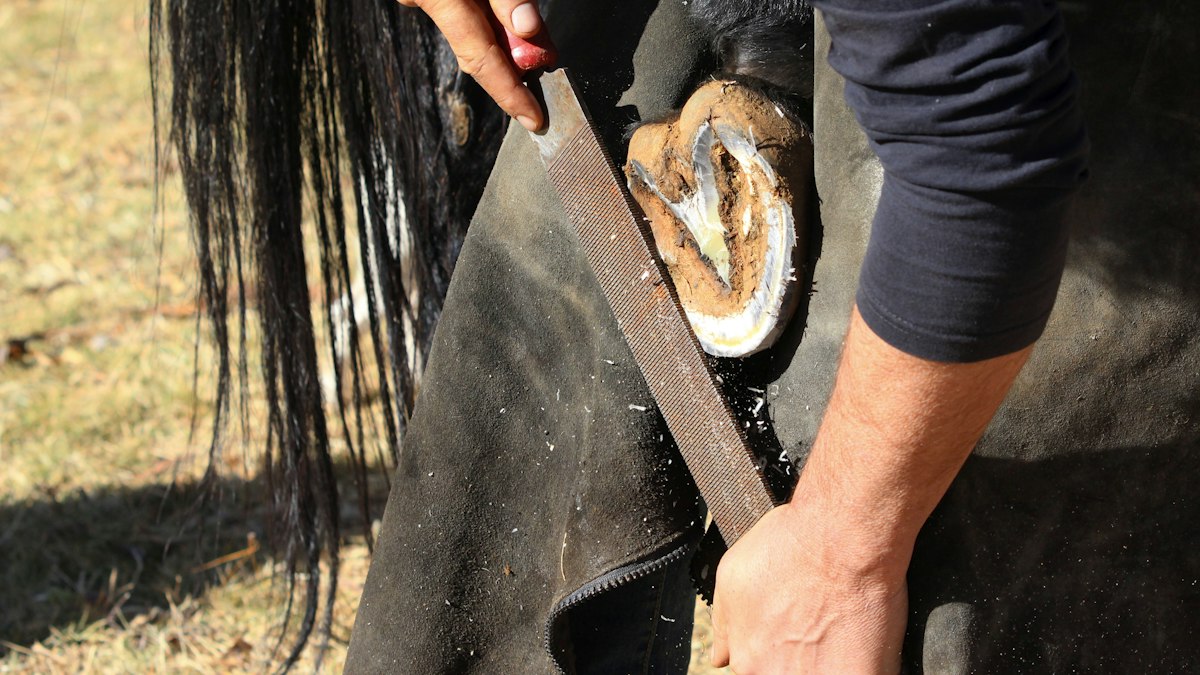
Regular farrier visits keep the hooves balanced and at a healthy length. Many horses are seen roughly every four to eight weeks, but the right interval depends on how quickly your horse’s hooves grow, whether they are shod, their workload and the season. Your farrier will recommend a schedule that suits your horse.
Barefoot horses still need regular trimming. Without it, hooves can become long, unbalanced or prone to cracking and flaring.
To make farrier visits go smoothly:
- Have your horse caught, clean and dry, with legs and feet brushed off.
- Provide a level, dry, well-lit area out of the wind and rain.
- Practise picking up and holding the feet between visits so your horse stands well.
- Mention any changes you have noticed, such as stumbling, shortened stride or lost shoes.
- Book the next appointment before the farrier leaves, so intervals do not slip.
Good communication between owner, farrier and vet makes a real difference, particularly for horses with ongoing hoof problems.
Environment, Diet And Hoof Health
Hooves reflect the conditions a horse lives in. Prolonged standing in deep mud or wet bedding can soften the hoof and encourage infections such as thrush. Very dry, hard ground can lead to cracking and chipping, and frequent changes between wet and dry can weaken the hoof wall.
- Keep stables clean and dry, and skip out droppings and wet bedding daily.
- Where possible, provide a well-drained area in fields so horses can get out of the mud.
- Pick out feet before turning out and after bringing in.
- Allow plenty of turnout and regular exercise, as movement supports healthy circulation in the hoof.
Diet matters too. Hooves grow from the inside, so a balanced diet with the right vitamins and minerals supports good horn quality. Because hoof horn grows slowly, any improvement from a change in diet can take months to show. Ask your vet or an equine nutritionist for advice before adding supplements or making big changes to feeding, especially for horses prone to laminitis.
When To Speak To A Vet
Contact your vet promptly, or your farrier where appropriate, if you notice:
- Sudden lameness, or a horse that does not want to put weight on a foot.
- Heat in one or more hooves, or a strong, bounding digital pulse.
- A reluctance to move, shifting weight between feet, or leaning back onto the heels. These can be signs of laminitis, which is an emergency.
- A nail, stone or other object stuck into the sole.
- A deep crack, especially one reaching the coronary band or causing bleeding or lameness.
- Swelling, cuts or discharge at the coronary band or heels.
- A strong smell or discharge that does not improve with good daily care.
If you are unsure whether to call your vet or your farrier, start with your vet, particularly if your horse is lame.
Frequently Asked Questions
How Often Should I Pick Out My Horse’s Feet?
At least once a day, and ideally before and after riding and when bringing your horse in from the field.
Do Barefoot Horses Need A Farrier?
Yes. Barefoot horses still need regular trimming to keep their hooves balanced and at a healthy length. Your farrier will advise on the best interval.
What Does Thrush Look And Smell Like?
Thrush usually shows as a black, crumbly discharge around the frog with a strong, unpleasant smell. Speak to your farrier or vet for advice on managing it.
What Should I Do If My Horse Loses A Shoe?
Keep the horse on soft ground, check the foot for damage or raised nails, and call your farrier to arrange a replacement. Contact your vet if the horse is lame or the hoof is damaged.
Daily picking, regular farrier visits and a watchful eye will keep most horses’ feet in good order and help you catch problems early. For more horse care guides, visit our horse care hub, or explore the care library for advice on other animals.