Goldfish Care Guide: Tank Size, Filtration and Feeding
On this page
Good goldfish care starts with far more space and filtration than most people expect. Goldfish grow large, live for many years and produce a lot of waste, so they need a big, cycled tank with a strong filter, regular water changes and small, varied meals. A bowl is not a suitable long-term home, however traditional it may be.
Key Points
- Goldfish are coldwater fish that can live for well over a decade with good care.
- Fancy goldfish need a large aquarium; single-tailed types such as commons, comets and shubunkins usually grow too big for most indoor tanks and are better suited to a pond.
- They are messy fish, so a powerful, well-maintained filter and weekly partial water changes are essential.
- Feed small amounts once or twice a day, using a good-quality goldfish food plus some vegetables.
- Goldfish are sociable and do best with other goldfish of a similar type.
Know Which Type Of Goldfish You Have
All goldfish are the same species, but decades of selective breeding have produced two broad groups with quite different needs.
Single-tailed goldfish (commons, comets, shubunkins) have streamlined bodies and are fast, strong swimmers. They can grow to 25 cm or more and are very active. In most homes, a pond of suitable size and depth is the more realistic long-term setting for them.
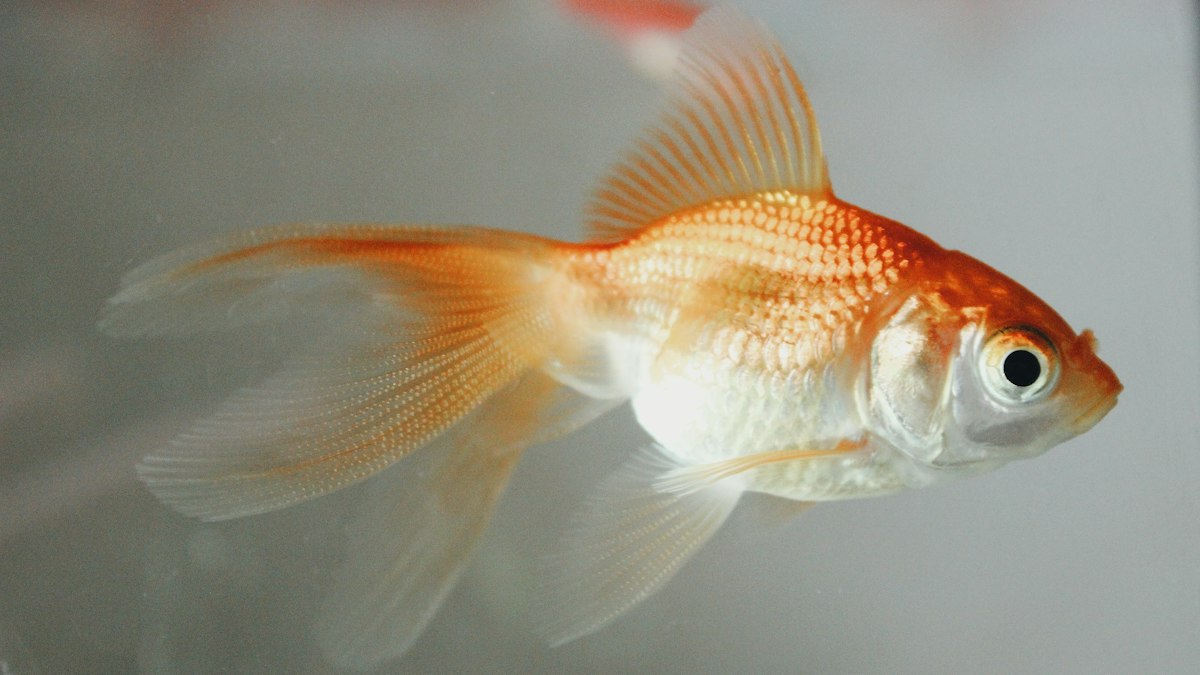
Fancy goldfish (orandas, ryukins, fantails, moors, ranchus and many more) have rounder bodies and double tails. They swim more slowly and are better suited to aquariums, but they can be more delicate, particularly around digestion and swim bladder problems.
It is generally best not to mix the two groups. Single-tailed fish tend to outcompete fancies at feeding time.
Tank Size: Why Bigger Really Is Better
Goldfish produce a lot of ammonia, and a small volume of water fouls quickly. A larger tank dilutes waste, keeps temperature and water chemistry more stable, and gives the fish room to swim. There is no single official figure, but widely shared guidance suggests:
| Goldfish type | Commonly suggested starting point |
|---|---|
| A pair of fancy goldfish | Around 100–120 litres, with extra volume for each additional fish |
| Single-tailed goldfish | A large aquarium of several hundred litres, or ideally a well-designed pond |
A longer tank is more useful than a tall one, because goldfish swim horizontally and benefit from a larger water surface for gas exchange. If you are choosing between two tanks of similar volume, pick the one with the bigger footprint.
What About Bowls?
Bowls are too small, hard to filter and have a narrow surface for oxygen exchange. Fish kept in them often live far shorter lives than they could. If you inherit a goldfish in a bowl, moving it to a properly filtered tank is one of the kindest things you can do.
Filtration And Water Quality
Filtration is where goldfish keeping succeeds or fails. Choose a filter rated comfortably above your tank size; many goldfish keepers look for a filter turning over the tank’s volume several times an hour. External canister filters and large internal or hang-on filters all work, provided they have plenty of space for biological media.
Fancy goldfish are not strong swimmers, so position the outflow or use a spray bar to avoid a powerful current that pushes them around.
Cycle Before You Stock
The filter needs an established population of beneficial bacteria to process waste. Cycle the tank before adding goldfish, and test with a liquid kit for ammonia, nitrite and nitrate. Ammonia and nitrite should read zero; nitrate should be kept low with regular water changes. Our guide to cycling explains the process in more detail, and you will find it alongside other guides in our fish care hub.
Water Changes And Maintenance
- Change around 25–30% of the water each week, adjusting according to your nitrate readings and how heavily stocked the tank is.
- Always treat new tap water with a dechlorinator and match the temperature closely.
- Vacuum the gravel or substrate to remove trapped waste.
- Rinse filter sponges gently in removed tank water, never under the tap, and never replace all the media at once.
Temperature And Set-Up
Goldfish are coldwater fish and generally do not need a heater in a normally heated home. Fancy goldfish are often kept at roughly 18–22 °C, and single-tailed varieties tolerate cooler conditions. Sudden swings are more of a problem than a slightly cool room, so keep the tank away from radiators, sunny windows and draughty doors. A reliable aquarium thermometer lets you keep an eye on things through the seasons.
For décor, choose smooth items without sharp edges, especially for fancies with delicate fins or protruding eyes. Fine sand or larger smooth gravel are common substrate choices; avoid pea-sized gravel that a goldfish could get lodged in its mouth while foraging. Hardy plants such as anubias, java fern and some types of moss tend to survive goldfish nibbling better than softer plants.
Fit a lid. Goldfish occasionally jump, and a cover also reduces evaporation.
Feeding Your Goldfish
Overfeeding is one of the most common goldfish problems. Uneaten food pollutes the water, and too much at once can upset digestion, especially in fancy varieties.
- How much: offer only what your fish will finish in a couple of minutes, once or twice a day.
- What: a good-quality goldfish pellet or gel food as the staple. Many fancy goldfish keepers prefer sinking pellets, which reduce the amount of air gulped at the surface.
- Variety: add vegetables such as blanched and peeled peas, courgette or spinach, plus occasional frozen foods like daphnia or bloodworm.
- Soaking: some keepers soak dry food briefly before feeding to soften it.
Goldfish always behave as though they are starving. It is a natural foraging habit, not a sign that they need more food.
Tank Mates And Social Needs
Goldfish are social and generally happier with company, so plan your tank size around at least two. The best companions are other goldfish of a similar type and size.
Avoid tropical fish, which need warmer water, and very small fish that a goldfish might swallow. Also avoid species that nip fins or suck on the slime coat of slower fish. If in doubt, keeping goldfish with goldfish is the simplest and safest choice.
Quarantine New Arrivals
New fish can bring parasites or infections. Where possible, keep them in a separate quarantine tank for a few weeks and watch for any signs of illness before adding them to your main tank.
When To Speak To A Vet
Many goldfish health problems trace back to water quality, so test your water first whenever something looks wrong. Seek advice from a vet experienced with fish if you notice:
- Floating upside down, sinking, or struggling to stay level for more than a short period.
- Clamped fins, rubbing against objects, or gasping at the surface.
- White spots, fluffy growths, red streaks, ulcers or ragged fins.
- Swelling of the body or scales sticking outwards.
- Not eating for several days, or several fish becoming unwell together.
Some vets offer fish consultations or home visits, and they will often want recent water test results. This guide is general information and does not replace an individual assessment by a qualified veterinarian.
Frequently Asked Questions
How Long Do Goldfish Live?
With good care, goldfish commonly live for ten years or more, and some live considerably longer. Short lifespans are usually linked to small tanks and poor water quality.
Do Goldfish Need A Heater?
Usually not. They are coldwater fish and do well at normal room temperature, provided it stays fairly stable. A thermometer helps you spot unusual swings.
Why Does My Goldfish Keep Floating Or Sinking?
Buoyancy problems are especially common in fancy goldfish and can be linked to diet, water quality or underlying illness. Check your water and feeding routine, and speak to a fish-experienced vet if it persists.
Can Goldfish Live Alone?
They can survive alone, but they are sociable and generally do better with at least one other goldfish of a similar type.
Goldfish have a reputation as easy starter pets, but they are really long-lived fish that need space and steady care. Give them a large, well-filtered tank and a sensible feeding routine, and they can become remarkably characterful companions. Find more practical guides in the care library.