
Axolotl Care Guide: Water Quality, Temperature and Tank Setup
On this page
Axolotl care is mostly about keeping water cool, clean and calm. These aquatic salamanders need a cycled tank, a gentle filter, a temperature that stays cool all year, and a soft or bare floor they cannot swallow. If you can keep the water right, they are hardy, long-lived and wonderfully odd companions.
Key Points
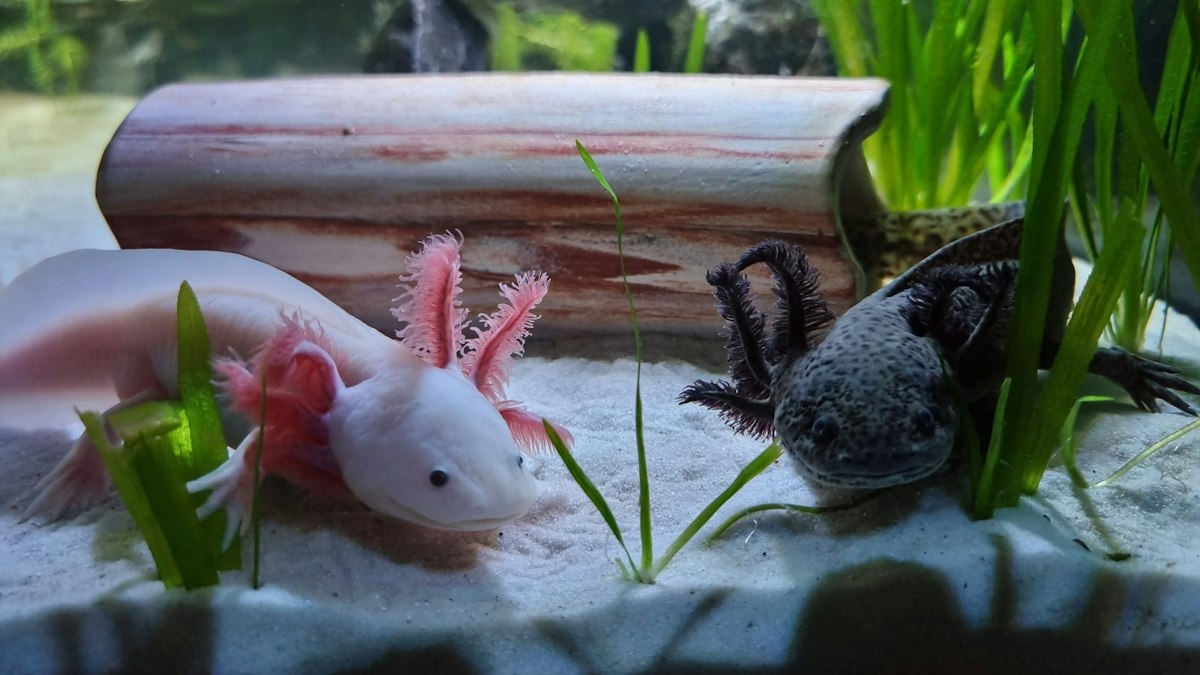
- Axolotls are fully aquatic amphibians that stay in their larval form throughout life, keeping their feathery external gills.
- Cool water matters most: roughly 15–18 °C is widely considered ideal, and sustained temperatures above about 20 °C can cause stress.
- The tank must be cycled, with zero ammonia and nitrite and low nitrate. Test with a liquid kit.
- Use a bare bottom or very fine sand. Gravel can be swallowed and cause blockages.
- Check local rules before buying. Keeping axolotls is restricted or requires a permit in some places.
Before You Buy: Check The Law And The Commitment
Axolotls are critically endangered in the wild, where they survive only in a small area of canals near Mexico City. Pet axolotls are captive-bred, but some states and regions restrict ownership, often because of concerns about escaped animals affecting native wildlife. Rules can change, so check with your local authority or relevant wildlife agency before you commit.
It is also worth knowing that axolotls commonly live 10 to 15 years with good care. That is a long time to keep a tank cool through every summer, so plan for it from the start.
Tank Size And Set-Up
Adult axolotls usually reach somewhere between 20 and 30 cm long. They are not active swimmers in the way many fish are; they walk along the bottom and float lazily, so floor space matters more than height.
- One adult: a tank of around 75–90 litres with a long footprint is a widely recommended minimum.
- Additional axolotls: add generous extra space for each one, and a bigger tank overall is always more stable.
- A secure lid: axolotls can occasionally jump, and a lid also keeps out dust and curious pets. Leave a gap between lid and water for air exchange.
Substrate
Axolotls feed by suddenly opening their mouths and sucking in whatever is in front of them, including the floor. For that reason, gravel and small pebbles are a risk. The two common safe choices are:
- Bare bottom: easy to clean, though some axolotls struggle to grip smooth glass.
- Very fine sand: grains small enough to pass through safely if swallowed. Introduce it once your axolotl is fully grown.
Large, smooth stones that are bigger than the axolotl’s head are also safe as décor.
Hides, Plants And Lighting
Axolotls have no eyelids and prefer dim conditions. Provide at least one cave or hide, plus plants to break up sightlines. Low-light plants such as anubias, java fern and floating plants work well. Keep any aquarium lighting low, or skip it entirely if the room has natural daylight; a strong light can make them hide all day.
Water Quality: The Heart Of Axolotl Care
Because axolotls breathe partly through their gills and skin, they are sensitive to poor water. Cycle the tank fully before adding an axolotl, so that the filter’s bacteria can convert ammonia and nitrite into nitrate.
| Parameter | Widely used guideline |
|---|---|
| Ammonia | 0 ppm |
| Nitrite | 0 ppm |
| Nitrate | Kept low, commonly below around 20–40 ppm |
| pH | Roughly 7–8, and stable |
| Hardness | Moderately hard water is generally preferred over very soft water |
Treat these as general ranges. Stability matters more than chasing exact figures, so avoid adjusting water chemistry with products unless you understand why.
Filtration And Flow
Axolotls dislike strong currents. Their gills may curl forward, a common sign of stress, if the flow is too much. Sponge filters are popular because they are gentle and offer plenty of surface for bacteria. If you use a larger filter, add a spray bar or baffle to soften the outflow.
Water Changes
- Change around 20–30% of the water weekly, adjusting according to your nitrate readings.
- Always treat new tap water with a dechlorinator that also handles chloramine.
- Match the temperature of new water closely to the tank.
- Remove uneaten food and waste promptly with a turkey baster or small siphon.
For more on frogs, newts and other aquatic and semi-aquatic species, see our amphibian care hub.
Temperature: Keeping Axolotls Cool
Temperature is the factor that catches most new keepers out. Axolotls come from cool, high-altitude water, and they do not need a heater in a typical UK home. Roughly 15–18 °C is widely considered ideal. Above about 20 °C, many axolotls show signs of stress, lose their appetite or become more prone to infections, and higher temperatures can quickly become dangerous.
Use a reliable aquarium thermometer and check it daily, especially in summer. Ways to keep the water cool include:
- Placing the tank in a cool room away from windows, radiators and appliances.
- Clip-on aquarium cooling fans, which lower temperature through evaporation (top up water more often).
- An aquarium chiller for homes where summers regularly get warm.
- In an emergency, floating sealed bottles of frozen dechlorinated water in the tank, changing them as they thaw. Avoid sudden large drops.
Feeding Your Axolotl
Axolotls are carnivores. A varied diet based on good-quality foods keeps them healthy:
- Earthworms are often considered an excellent staple. Use worms from a clean source free of pesticides, chopped to size for smaller axolotls.
- Axolotl or carnivore sinking pellets designed for aquatic amphibians.
- Frozen bloodworm, useful for juveniles, though less complete as a main diet for adults.
Juveniles typically eat daily. Adults generally do well fed every two to three days. Feed with blunt tongs or drop food in front of them, and remove anything left after a short while. Avoid feeder fish, which can carry parasites and sometimes nip at gills.
Tank Mates And Handling
Axolotls are best kept alone or with other axolotls of a similar size. Fish tend to nibble their gills, and axolotls will try to eat anything that fits in their mouths. Young axolotls can also nip each other, so keep juveniles of different sizes apart.
Avoid handling. Their skin is delicate and covered in a protective slime coat, and much of their skeleton is soft cartilage. When you need to move one, use a fine mesh net or a clean container and transfer it gently.
Signs Of A Healthy, Settled Axolotl
Getting to know what normal looks like for your own axolotl makes it much easier to spot problems early. A healthy, comfortable axolotl usually:
- Has full, fluffy gill filaments that sit back or slightly outwards, rather than curling forward.
- Rests calmly on the bottom for long periods, which is normal behaviour rather than a sign of boredom.
- Shows interest in food and takes it readily, often with a quick snap.
- Has smooth, intact skin and a body that looks well rounded, roughly as wide as its head.
- Gulps air at the surface only occasionally. Frequent trips up can point to low oxygen or warm water.
Gill size can also tell you something about your tank. Axolotls in well-oxygenated water sometimes have slightly smaller gills, while those in still water may grow bushier ones. Sudden changes are more meaningful than size alone, so take a quick photo every few weeks to compare.
A Simple Weekly Routine
- Check the thermometer daily and the test kit at least weekly.
- Remove waste and leftover food as you see it.
- Carry out a partial water change with dechlorinated, temperature-matched water.
- Squeeze the filter sponge in removed tank water when flow starts to slow.
When To Speak To A Vet
Many problems improve once water and temperature are corrected, so test and check the thermometer first. Seek advice from a vet experienced with amphibians or exotic species if you notice:
- Gills that shrink, fall apart or stay curled forward despite good water.
- White, fluffy patches on the skin or gills.
- Red, inflamed skin, open wounds or a peeling slime coat.
- Persistent floating, a swollen body, or difficulty staying upright.
- Refusing food for more than a week or so, or obvious weight loss.
Exotic vets are not available everywhere, so find one before you need help. This guide offers general information only and does not replace an individual assessment by a qualified veterinarian.
Frequently Asked Questions
Do Axolotls Need A Heater?
Generally no. They are a cool-water species, and the bigger challenge is usually keeping water cool enough in warm weather.
Why Are My Axolotl’s Gills Curled Forward?
This is often a sign of stress from strong water flow, poor water quality or high temperature. Check all three and reduce the current if needed.
Can Axolotls Live With Fish?
It is best not to. Fish may nibble their gills, and axolotls may try to eat small fish, which can also introduce parasites.
Is Sand Safe For Axolotls?
Very fine sand is generally considered safe for adult axolotls. Gravel and small stones are not, because they can be swallowed.
Axolotls are calm, curious and full of character, but they depend completely on you for clean, cool water. Get the tank right before they arrive, keep testing, and they can be with you for many years. Browse more guides in the care library.