
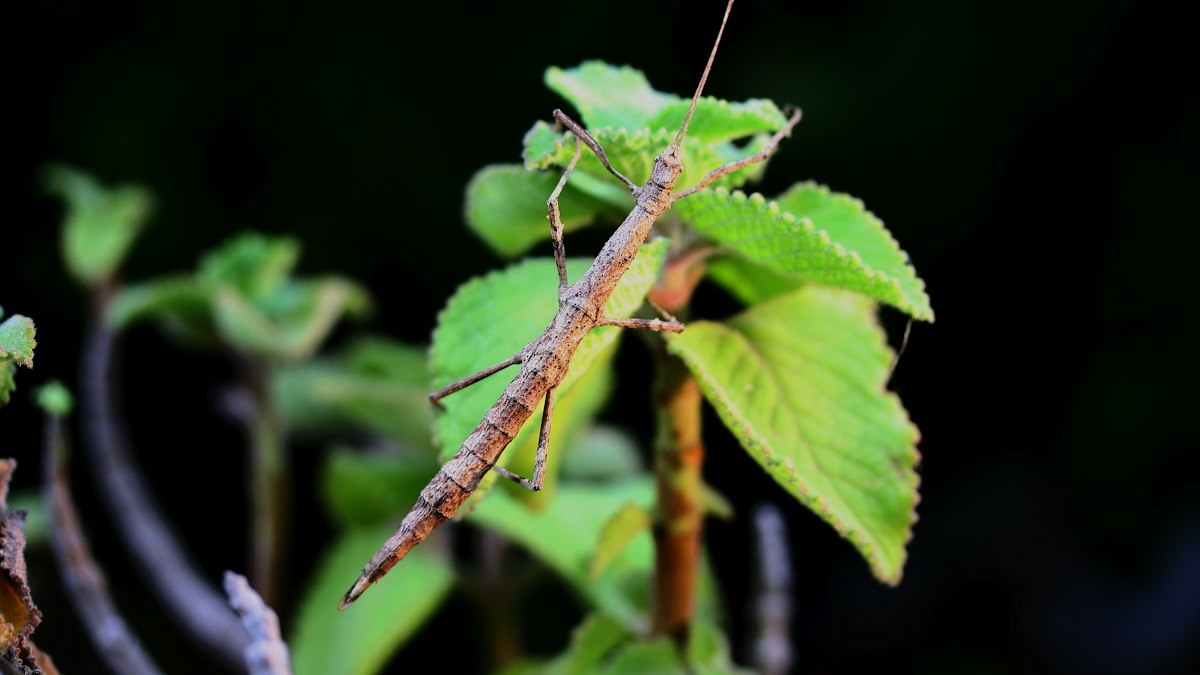
Stick Insect Care for Beginners: Enclosure, Food Plants and Moulting
On this page
Stick insect care is simple once you have the essentials in place: a tall, well-ventilated enclosure, a steady supply of fresh, pesticide-free leaves, light misting and plenty of room to moult. Most popular species are calm and undemanding, which makes them a good first invertebrate for families. The details still matter, though, because the most common problems come from stale food, cramped housing and disturbed moults.
Key Points
- Find out exactly which species you have, as food plants, humidity and size vary between species.
- Use a mesh or well-ventilated enclosure at least three times as tall as the adult insect’s body length.
- Bramble suits many common species, but always check what yours eats and collect leaves away from roadsides and sprays.
- Never handle or disturb a stick insect while it is moulting.
- Most pet species are not native to many countries, so never release insects or eggs outdoors.
Know Your Species
“Stick insect” covers thousands of species, and only a small number are commonly kept. Among the most familiar in homes and schools are the Indian or laboratory stick insect, which is slim, green or brown and very easy to keep; the pink-winged stick insect, which is a little more delicate; and the giant prickly stick insect, a larger, spiny species that curls its tail like a scorpion when disturbed.
Each has slightly different preferences for food, temperature and humidity. Ask the breeder or shop for the species name, and look up a reliable care sheet for that species. The guidance below covers general principles that apply to most commonly kept stick insects.
Choosing And Setting Up The Enclosure
Stick insects moult by hanging upside down and slowly pulling themselves out of their old skin. If they do not have enough height, they can become stuck or end up with twisted legs. That makes height the single most important measurement.
- Height: as a general rule, at least three times the length of the fully grown insect. Taller is better.
- Ventilation: mesh-sided enclosures or tanks with large mesh panels keep air moving and reduce mould. Avoid sealed plastic boxes.
- Space: allow enough room for every insect to hang freely without crowding. Overcrowding can lead to injuries and missing limbs.
- Access: a front-opening door makes changing food and cleaning much easier than a top-opening lid.
- Escape-proofing: nymphs are tiny, so check that gaps and mesh holes are small enough to keep them in.
Line the floor with kitchen paper or a thin layer of a suitable substrate such as coir. Kitchen paper makes it easier to see and collect droppings and eggs, and it is simple to replace. Avoid placing the enclosure in direct sunlight or next to radiators, both of which can cause dangerous overheating and drying out.
Temperature And Humidity
Many commonly kept species do well at normal indoor room temperatures, roughly the range most homes sit at during the day. Some tropical species need extra warmth or humidity, so check your species’ requirements. If you add any heating, use a thermostat and keep a thermometer in the enclosure so you know what conditions your insects are experiencing.
Light misting with clean water, usually once a day or every other day, gives the insects droplets to drink from and helps keep leaves fresh. Mist the leaves rather than soaking the insects, and let the enclosure dry between sprays. Constant wetness encourages mould.
Food Plants And Feeding
Stick insects eat fresh leaves, and the quality of the food has a large effect on their health. Bramble (blackberry) is accepted by many common species and is available for much of the year, which makes it a mainstay for many keepers. Depending on the species, other plants may include privet, rose, raspberry, oak, hawthorn, ivy or eucalyptus. Check which plants are suitable for your species before offering anything new.
Good feeding practice:
- Collect safely: pick leaves from places unlikely to be sprayed with pesticides or herbicides, and away from busy roads. Avoid garden centre plants, which may have been treated.
- Rinse and shake: rinse cuttings gently to remove dust and other insects, then shake off excess water.
- Keep stems in water: stand cuttings in a small, heavy jar of water to keep them fresh for longer.
- Cover the jar opening: pack the gap around the stems with kitchen paper or use a lid with holes, because small nymphs can fall in and drown.
- Replace regularly: change food before it wilts or dries, typically every few days. Remove old cuttings completely.
In winter, when fresh leaves are harder to find, bramble often keeps some leaves in sheltered spots. Some keepers grow a potted bramble or other food plant so they always have a supply. Freshly hatched nymphs may find tough leaves difficult, and trimming the edges of a leaf can help them start feeding.
Understanding Moulting
Stick insects grow by shedding their outer skin, a process called moulting. Young insects, called nymphs, go through several moults before reaching adulthood. Before a moult, an insect may stop eating and stay still for a day or so. It will then hang from the roof or a branch and gradually ease out of the old skin.
During and immediately after a moult, the insect is soft and vulnerable. To give it the best chance:
- Do not touch, move or handle it, even if the process looks slow or awkward.
- Avoid cleaning or rearranging the enclosure until it has finished and hardened.
- Keep humidity appropriate for the species, as overly dry conditions can make moulting harder.
- Leave the shed skin for a while, as many stick insects eat it.
Nymphs that lose a leg can often regrow it over later moults, though the new leg may be smaller. Adults do not moult again, so lost limbs are not replaced.
Eggs, Breeding And Responsible Keeping
Many popular species, including the Indian stick insect, can reproduce without a male, so a single female will often lay a steady supply of eggs. The eggs look a little like small seeds and are usually dropped on the floor of the enclosure. Depending on species and temperature, they may take weeks or months to hatch.
If you want to raise more insects, collect eggs and keep them in a small ventilated container on slightly damp kitchen paper or substrate, checking for mould. If you do not want more, plan ahead, because numbers can grow quickly. Many keepers give surplus insects to other hobbyists or schools.
Most pet stick insects are not native to the places they are kept. Never release insects or eggs into gardens or the countryside, and do not throw eggs onto a compost heap or into garden waste, where they could hatch. A common recommendation for unwanted eggs is to freeze them for several days before disposal.
Handling Stick Insects
Stick insects do not need handling, but most docile species tolerate it calmly if done gently. Let the insect walk onto your hand rather than picking it up by the body or legs, and keep handling sessions short and close to a soft surface in case it drops. Children should be supervised. Some species, including spiny types, can defend themselves with sharp spines or by releasing a smelly substance, so wash your hands afterwards and avoid handling insects that seem stressed.
When Something Seems Wrong
Few vets see stick insects, but many problems can be solved by checking husbandry first. If your insect seems unwell, run through these checks:
- Not eating for several days: is it preparing to moult? Is the food fresh, the right plant for the species, and free from sprays?
- Falling or struggling to grip: is the enclosure too dry, too hot or too smooth to climb? Could the insect be very old?
- Stuck in its old skin: was the enclosure too short or too dry? Avoid pulling at the skin, as this can cause injury.
- Mould or a sour smell: increase ventilation, reduce misting, and clear out droppings and old leaves.
- Several deaths in a short time: consider contaminated food, overheating or overcrowding.
If you are concerned and changes have not helped, a vet who treats exotic animals or invertebrates may be able to offer advice. This guide is general information only.
Frequently Asked Questions
How Long Do Stick Insects Live?
It varies by species. Many commonly kept species live for several months to around a year as adults, including their time as nymphs.
Do Stick Insects Need Water?
They drink droplets rather than from a bowl, so light misting of the leaves is the usual way to provide water. Open water dishes can be a drowning risk for small nymphs.
Can Different Species Live Together?
It is usually best to keep each species separately, as their needs differ and larger or spiny species can injure smaller ones.
Do Stick Insects Bite?
Commonly kept species are not considered dangerous, though some spiny species can scratch or pinch with their legs when alarmed.
With a tall, airy home and a reliable supply of fresh leaves, stick insect care becomes a calm and fascinating routine. Explore our invertebrate care hub for more species guides, or visit the care library for advice on other pets.